

Why Competence Alone Doesn't Guarantee Influence
Based on the “The Prince” by Niccoló Machiavelli. With a forward about the Cassandra phenomenon.


⛔️Cosmic Disclosure Warning ⛔️
The Cassandra Phenomenon in Everyday Life… before I begin to dig into Machiavelli’s recommendations on competence and influence. I want to dig into the Cassandra phenomenon.
The Cassandra phenomenon describes a deeply human experience: knowing, sensing, or understanding something important while feeling that others refuse to hear, acknowledge, or believe it.

I can relate to that sentiment; in the last few years, my warnings have started to be heard. Not sure what that means in the long run, but in my opinion, prophecies don’t have to come true… if the warning is heard… and real, meaningful change is enacted. Disaster can be averted!
The Cassandra Phenomenon
Named after the mythological figure (who might not be totally mythological, based on a true story maybe 🤔), Cassandra, whose accurate prophecies were ignored, the phenomenon continues to resonate because it reflects a psychological reality that many people encounter in ordinary life.

Cassandra was the daughter of Priam and Hecuba, making her a princess of Troy.
The most famous version of her myth says that the god Apollo (is Apollo the same spiritual being as who Christian’s later referred to as Lucifer? To be explored in the future) gave her the gift of prophecy. When she rejected his romantic advances, he cursed her so that although her prophecies would always be true, Nobody(except me) would believe them.
This made her a tragic figure: she knew disasters were coming but was powerless to prevent them.
At its core, the Cassandra phenomenon is less about being right and more about the emotional consequences of not being heard. Human beings depend on others’ validation to make sense of their experiences. When concerns, observations, or feelings are repeatedly dismissed, a person may begin to question their own perceptions. Over time, this can lead to self-doubt, frustration, and a sense of isolation.

In everyday settings, the phenomenon can appear in subtle ways. An employee may repeatedly raise concerns about a problem at work only to be ignored until a crisis emerges. A family member may notice unhealthy patterns in relationships that others refuse to acknowledge. A friend may sense emotional distress in someone they care about, yet find their concerns minimized or brushed aside.
The psychological impact can be significant. People who feel unheard often experience chronic stress and emotional fatigue. They may become reluctant to express themselves (I believe this is the real ⚠️), believing that their voice carries little weight. Others may become increasingly anxious, feeling burdened by knowledge or concerns they cannot effectively communicate. In some cases, repeated dismissal can erode trust in relationships and weaken a person’s confidence in their own judgment.
Yet the Cassandra phenomenon also highlights an important aspect of human psychology: the need for recognition. Being listened to does not necessarily require agreement. Often, what people seek is the reassurance that their perspective has been considered with sincerity and respect. When this recognition is absent, emotional distance and misunderstanding can grow.
If you need someone to listen to you.
Ultimately, the Cassandra phenomenon serves as a reminder that listening is not merely a social skill but a psychological necessity. In ordinary life, the simple act of taking another person’s concerns seriously can strengthen relationships, reduce feelings of isolation, and create space for genuine understanding. While not every warning or perception will prove correct, the willingness to listen may be one of the most powerful forms of validation we can offer one another.

Can you imagine a person like this…I can?
Well, let’s begin then…
Do you know someone (maybe you've worked beside them for years) who is brilliant, thorough, quietly exceptional at everything they do...
Who no one listens to?
And do you know someone else (perhaps in that same room, that same office, that same meeting) who says half as much, knows half as much, does half as much...
And somehow, everyone follows them?
If you've ever felt the quiet injustice of that (if you've ever been the person who did the work and watched someone else get the credit, the promotion, the trust), then this is for you.
Because what I want to talk about today isn't talent. It isn't an effort. It isn't even results.
It's something older, and stranger, and far more uncomfortable.
It's perception.
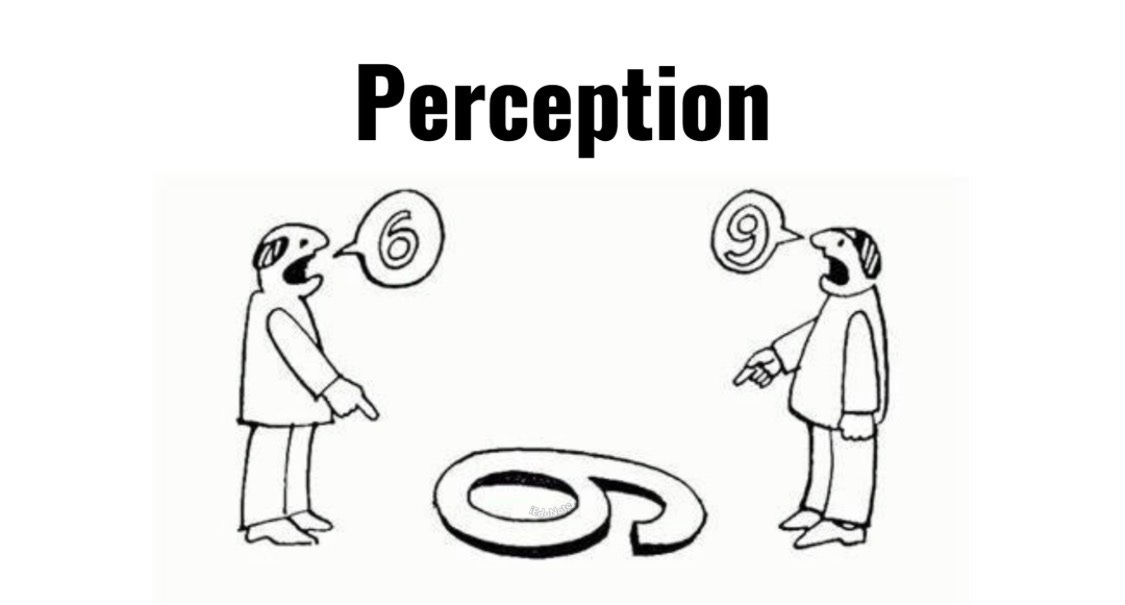
Niccolò Machiavelli wrote something that stopped me cold the first time I read it.
A simple sentence. A devastating idea.

"Everyone sees what you appear to be. Few truly feel what you are."
Read that slowly…
Everyone sees what you appear to be. Few truly feel what you are.
He wasn't celebrating that. He wasn't saying, "Go be fake. Perform. Deceive." He was describing reality.
The world as it actually operates… not as we wish it did. And what he saw, five hundred years ago in the corridors of Florence, is exactly what plays out today in boardrooms and classrooms and families and friendships:
People respond to what they can see. And most of what you are, they cannot see.
Here's the quiet tragedy of competence.

For poor Cassandra, they saw a hysterical young woman, a priestess of the god Apollo, pulling at her hair, raving about the destruction of their city, which had impenetrable walls. They could never have imagined this insane girl could be right. So they ignored her.
in our modern lives…
When you are truly good at something, when you have put in the years, when the work comes to you with ease and precision, it becomes invisible. Not because people are ungrateful. But because excellence, when it's real, tends to look effortless. And we don't celebrate effortlessly. We celebrate the struggles we can witness. We have confidence that we can feel in a room. We follow stories we can understand.
The person who solves the problem silently, who fixes the crisis before anyone knows it existed, who delivers perfectly and says nothing.
That person gets a nod.
The person who narrates the journey, who makes the room feel the weight of the challenge before revealing the solution, who understands that human beings don't just respond to answers… they respond to experiences…

Julius Caesar understood this… he might not have been the best general of all time, but he certainly made it sound that way in “The Gallic Wars”
That person gets a following.
This is not fair. But it is true.
Think about someone you genuinely admire.

A leader.

A mentor.
Someone whose authority you've never really questioned.

Now ask yourself honestly: is it because you've audited their decisions? Reviewed their track record? Independently verified their expertise?
Or is it because of how they carry themselves? The way they speak is without rushing. The way they occupy a room. The way they look at you when you talk, as though your words are the only words in the world. The way they've told you, through a hundred small signals, "I know where I'm going. You can trust me."

Machiavelli understood this with almost uncomfortable precision. He said a leader must appear merciful, faithful, humane, sincere, and religious… and then, with characteristic bluntness, he added: but you must also be these things, because it is useful.
Notice the order.
Appear first. Be… because it's useful.
He wasn't being cynical. He was being architectural. He was saying that how you are received is the structure. What you actually are is what holds it up from the inside. But without the structure, no one ever gets inside to see the foundation.
Competence is the foundation.
Perception is the door.
And if there's no door, no one enters.

Can I tell you about a woman I will call Elena?
Elena was, by every measurable standard, the most capable person in her organization. She knew the systems, the history, the numbers, the people. When something broke (and things always break), it was Elena who quietly and methodically put it back together. The organization ran on her competence. Her colleagues knew it. Her manager knew it.
And when the leadership role opened up, they gave it to someone else.
Someone younger. Someone with a louder laugh, a less cantankerous person, and a habit of walking into a room and immediately making the room feel like something was about to happen.
Elena was devastated. And furious. And she had every right to be… in a world that rewarded what she'd actually done.
But the people who made that decision weren't choosing the best technical candidate.
They were choosing the person who made them feel certain.
And Elena (brilliant, essential Elena) had never learned to make people feel certain. She delivered results, but quietly. She solved problems, but she solved them alone. She had never told her story. She had never made her competence visible. She had assumed (as so many of us assume) that the work would speak for itself.

Machiavelli would have grieved for her. And then he would have said, gently but honestly:
The work never speaks for itself. You have to speak for it.
Now, I want to be careful here. Because what I'm describing can be misheard as a performance lesson. In spin. In learning to fake what you don't have.
That is not what this is.
There's a critical difference between manufacturing perception and communicating reality. Between building a false image and learning to make a true one visible. The individual presents competence they don’t have. And Machiavelli is clear… that works for a while, but it collapses. It always collapses because perception without substance is a house of glass.

What I'm talking about is something different.
It's the quiet, uncomfortable work of learning that your inner world is not automatically legible to other people.
That your discipline doesn't announce itself. That your preparation doesn't show on your face. That your years of earned wisdom do not radiate outward like heat.
You have to translate them. Intentionally. Humanly. Through how you speak, how you hold yourself, and how you choose to make other people feel in your presence.
Influence is not a reward handed to the most deserving.
It is a language. And competence, for all its beauty, is not the same language.
Machiavelli also wrote about something he called virtù… and people often translate it as "virtue," but that's not quite right. Virtù was closer to the force of character. The capacity to shape circumstances rather than merely respond to them. Energy that others could feel, not just measure.
That's what separates the effective from the influential.
The effective person changes the outcome. The influential person changes how people see the outcome… and who they credit, and who they follow, and who they trust with the next challenge.
Both matter. But only one of them is a compound.
So what does this actually mean for you?
It means that being good is necessary. It is not sufficient.
It means that the meeting where you say nothing, where you do the work beforehand and let others present it, is not humility. It's invisibility.
It means that telling your story is not arrogance. It is a translation. Translating what you know into something other people can receive and trust and act on.
It means learning to let people feel the weight of the problem before they see your solution, so the solution lands with meaning rather than vanishing into the noise.
It means understanding that human beings are not evaluation machines. They are emotional, social creatures who choose their leaders not purely on merit but on feeling. On the answer to a question they're always asking, always unconsciously asking:
Does this person know where they're going?
Can I trust them to take me there?
Do I feel more certain in their presence than I did before?
You’re competent, but you haven't answered those questions.
You are doing the work.
And someone else is getting the world.
Machiavelli spent his life watching capable people lose to lesser ones. He wasn't bitter about it. He was curious. And what he concluded (what he kept returning to, in every chapter, every letter, every political observation) was that the world does not run on merit. It runs on meaning.
On narrative. On symbol. On the stories people tell themselves about who deserves to be followed.
Your job (if you want your competence to become influential) is to stop waiting for the world to notice.
Start making yourself legible.
Not louder. Not false. Not performative.
Legible.
Show your work… not just the result, but the thinking behind it. Let people be inside the process. Speak with the quiet authority of someone who has earned their certainty. Make others feel something in your presence, not just after you've left the room.

Because here's the thing about Machiavelli that people always miss.
He wasn't teaching people how to be ruthless.
He was teaching people how to survive in a world that wouldn't reward them simply for being good.

Had Cassandra had his counsel and had she heeded his advice, she might not have acted so hysterically… maybe she would not have pulled at her hair so much 🤷🏽♂️. She might have calmly laid out her track record of accuracy, and maybe her father, King Priam, and Troy would have heeded her warnings. Who knows?
And five hundred years later, that world hasn't changed very much.
The question was never "Are you good enough?"
The question was always:
"Can they tell?"
With Love Always 🙏🏼🕊️💗
Nemo⚓️
The Nobody
Being someone who identifies with the Cassandra complex, this was an exceedingly good article. I have watched others get credit for my work in the past. I have seen bad things coming and tried to warn people and been called crazy. Even though I eventually turned out to be right. You made some excellent points I will try to take advantage of in the future, when I will need them more.
I loved this article because it changed my perspective on competency. Not sure I ever really thought of it like this. As a chef people know I’m competent but I’m not always acknowledged for it because after years of being competent it’s expected. But I have learned to talk about it and write about it. And when I teach cooking, my students get to experience it.